
BubbleFect vs Lipid-Based Transfection Reagents — Better Efficiency, Higher Cell Viability, Simpler Protocol
For decades, lipid-based transfection reagents have been the default choice for delivering biological cargo into cells. They are widely available, well documented, and familiar to most researchers. But familiarity is not the same as optimal, and as biological research has grown more ambitious (working with harder cell types, more complex cargo, and more demanding experimental conditions) the limitations of lipid-based delivery have become increasingly difficult to ignore.
BubbleFect offers a fundamentally different approach. Built on the science of liquid-liquid phase separation (LLPS) and biomolecular condensates, it is non-lipid, non-viral, temperature stable, and simple to use. In this post we look at how BubbleFect compares to leading lipid-based transfection reagents across the three areas that matter most to researchers: efficiency, cell viability, and simplicity.
The Limitations of Lipid-Based Transfection Reagents — Cytotoxicity, Cold Chain and Poor Cell Compatibility
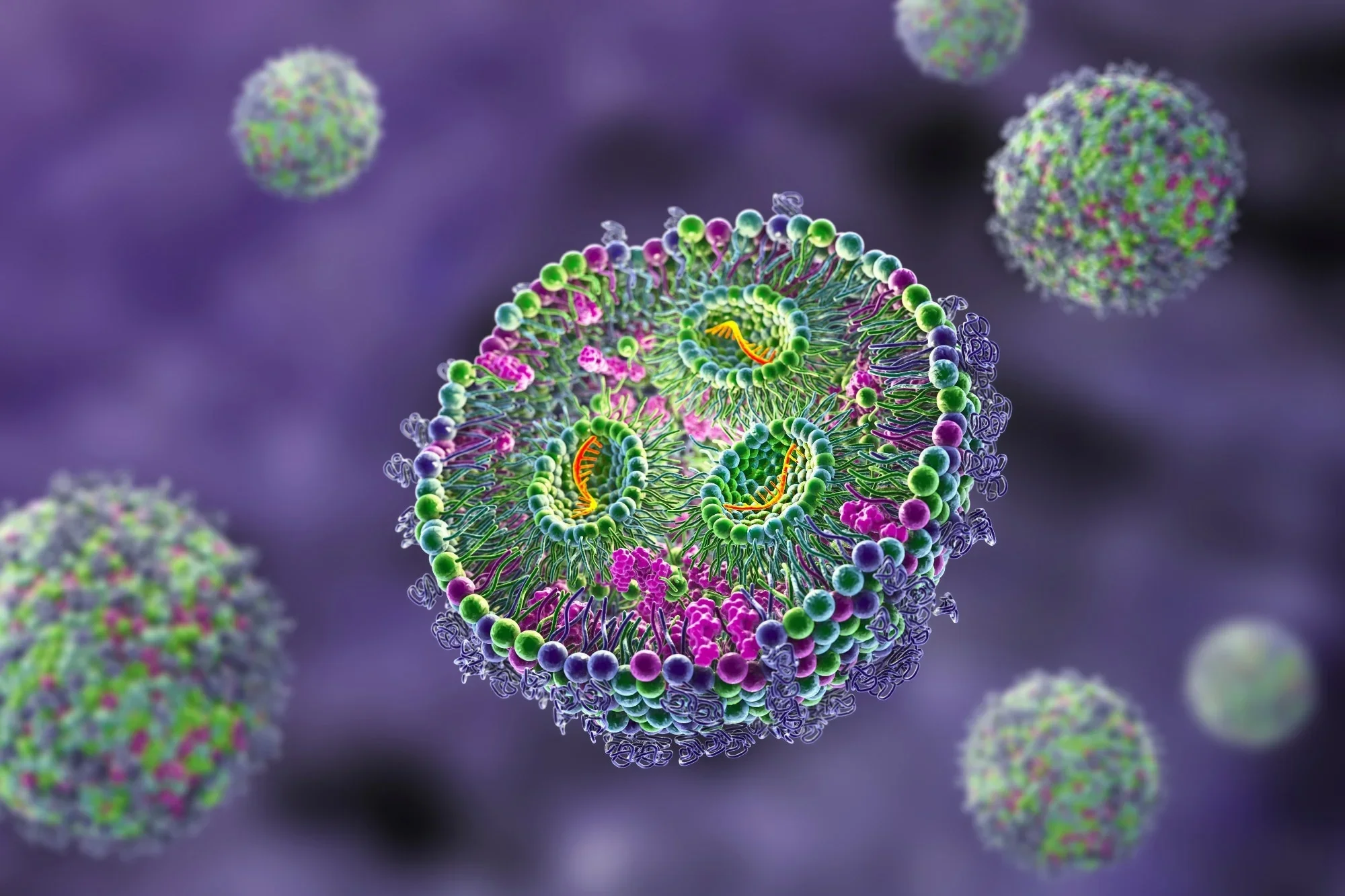
Lipid-based transfection reagents work by forming lipid complexes (lipoplexes or lipid nanoparticles) that encapsulate biological cargo and fuse with cell membranes to enable intracellular delivery. When conditions are right, this can be effective. But the mechanism comes with a set of trade-offs that have long been a source of frustration in the laboratory.
Cytotoxicity is the most significant. The cationic and ionisable lipids used in these formulations can trigger immune responses, membrane disruption, and cell death, particularly with repeated dosing or in sensitive cell types. For experiments where cell health is central to the readout, this is not a minor inconvenience. It is a fundamental problem.
Temperature sensitivity compounds the challenge. Most lipid-based reagents require cold chain storage, often at -20°C or below, and can degrade rapidly if handling conditions are not carefully maintained. This adds logistical complexity, increases the risk of product failure, and creates real barriers in settings without specialist cold chain infrastructure.
Limited compatibility with difficult cell types is the third major limitation. Lipid-based reagents typically perform well in established, easy-to-transfect cell lines. In primary cells, stem cells, suspension cells, and immune cells (the cell types that are increasingly central to cutting-edge research and therapeutic development) performance is often inconsistent, with lower efficiency and higher toxicity.
What is BubbleFect? — A Non-Lipid, Non-Viral Transfection Alternative Built on Biomolecular Condensate Science
BubbleFect takes a different approach at the molecular level. Rather than relying on lipid encapsulation, BubbleFect harnesses liquid-liquid phase separation, the same fundamental biological mechanism that cells use to form membrane-less compartments called biomolecular condensates. This LLPS-inspired self-assembly creates delivery-ready formulations that are gentle on cells, stable at room temperature, and effective across a broad range of cell types and cargo.
The result is a delivery platform that addresses the core limitations of lipid-based reagents without sacrificing performance.
Transfection Efficiency — How BubbleFect Compares to Lipid-Based Reagents Across mRNA, CRISPR and Protein Delivery
One of the most common concerns researchers have when considering a switch from a familiar transfection reagent is whether the new approach will match the efficiency they are used to. The data from BubbleFect speaks clearly.
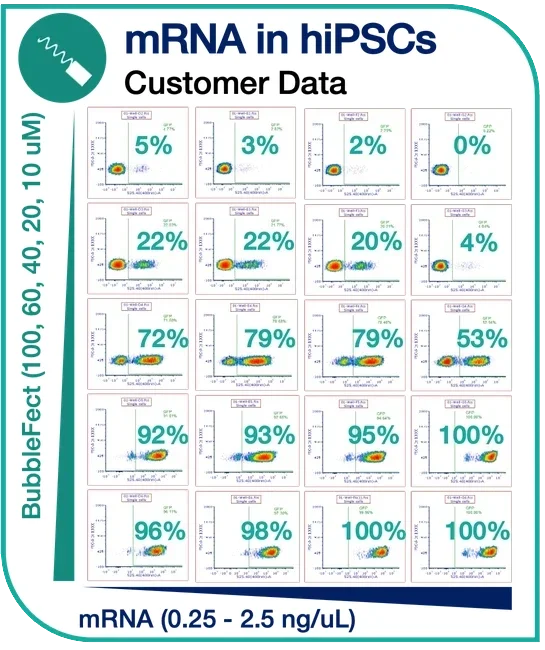
In hiPSCs — one of the most challenging cell types to transfect, and a cell type where lipid-based reagents frequently underperform, BubbleFect achieves up to 100% mRNA delivery efficiency. This is customer-generated data from independent laboratories, not internal benchmarking.
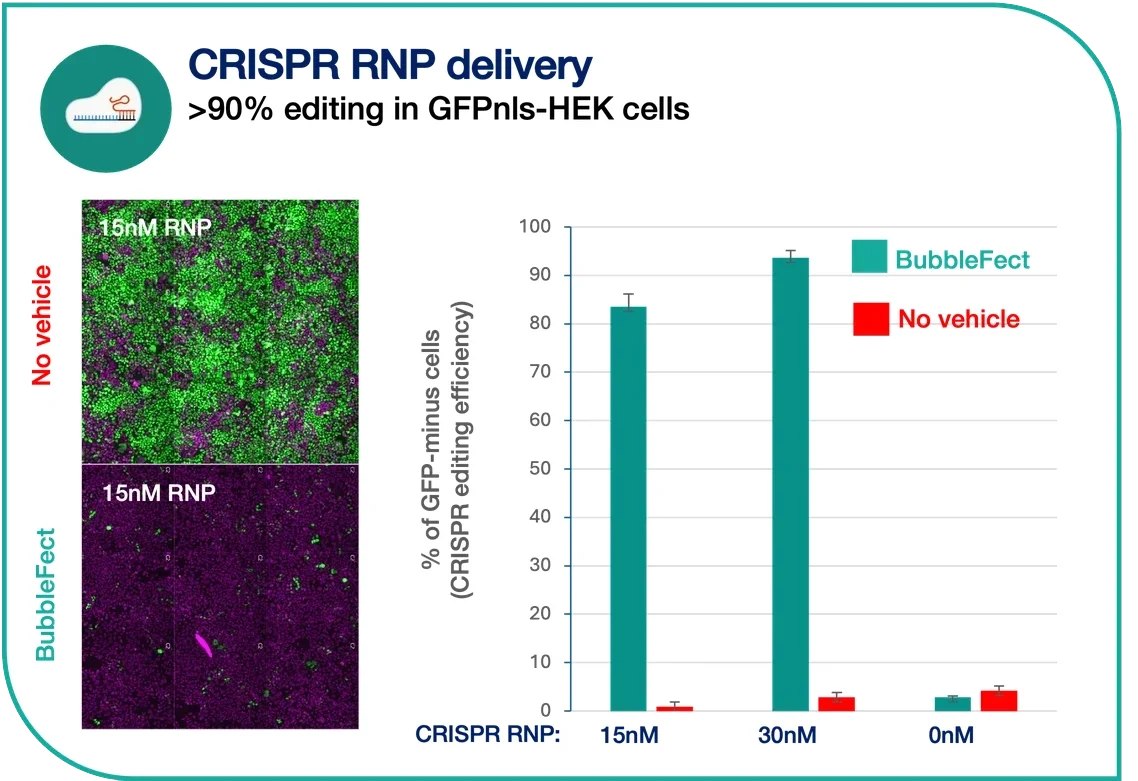
In CRISPR RNP delivery, BubbleFect achieves over 90% editing efficiency at 30 nM RNP in GFPnls-HEK cells, compared to near-zero editing in no-vehicle controls. When co-delivering a donor template for HDR, BubbleFect achieves 79% precise sequence knock-in, a result that demonstrates not just delivery but functional precision editing.
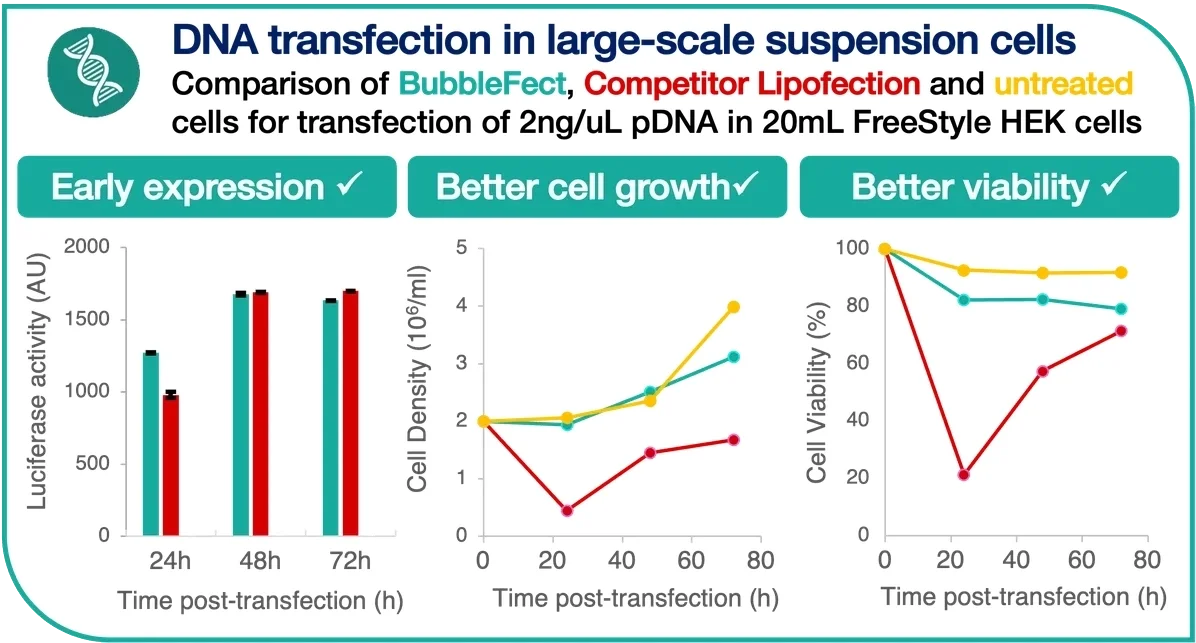
In large-scale suspension cell transfection — a demanding application central to bioproduction and cell therapy manufacturing — BubbleFect matches leading lipid-based competitors for expression at 48 and 72 hours, while delivering measurably earlier expression at 24 hours. This early expression advantage matters in time-sensitive experimental workflows.
In protein delivery in cancer cell lines, BubbleFect achieves approximately 85% delivery efficiency while maintaining cell survival above 90%.
Cell Viability After Transfection — Why Lipid-Based Reagents Fall Short in Primary and Suspension Cells
If efficiency is where BubbleFect matches leading lipid-based reagents, cell viability is where it clearly surpasses them. And for a growing number of research applications, viability is not secondary to efficiency, it is the experiment.
In head-to-head suspension cell experiments, cells treated with leading lipid-based competitors show a dramatic drop in viability, falling to approximately 20% at 24 hours post-transfection before slowly recovering. BubbleFect-treated cells maintain viability above 80% throughout the entire time course, closely mirroring the untreated control and continuing to grow to over 3 × 10⁶/ml by 72 hours.
The same picture emerges in protein delivery. Where mechanical delivery methods such as bead loading and mechanoporation produce measurable cell stress and loss, BubbleFect maintains cell survival above 90%, in both H1299 and HCT116 p53 KO cancer cell lines.
For researchers working in areas where cell health is directly relevant to experimental outcomes (ageing biology, functional genomics, cell therapy, primary cell research) this viability advantage is not a quality-of-life improvement. It is a prerequisite for valid science.
Transfection Protocol Simplicity — Room Temperature Stable, No Cold Chain, Three Steps
The third dimension of comparison is often undervalued in published data but deeply felt by anyone who has spent time troubleshooting a transfection protocol. Lipid-based reagents, while standardised, come with a set of requirements that add friction to the research process.
Preparation can be demanding. Lipid complexes must be formed under controlled conditions, with attention to ratios, incubation times, and temperature. Cold chain handling adds logistical burden. And in difficult cell types, optimisation can require extensive iteration before consistent results are achieved.
BubbleFect is designed to remove that friction. The protocol is three steps; mix cargo with water; add BubbleFect; apply to cells. No specialist equipment. No cold chain. No complex preparation. Results can be seen in as little as 4 to 24 hours.
BubbleFect is also stable at room temperature, removing cold chain requirements entirely. It ships globally without dry ice or refrigeration, making it accessible to labs in settings where cold chain infrastructure is limited or unreliable.
For researchers running high-throughput experiments, working across multiple cell types, or simply trying to reduce the number of variables in a complex protocol, this simplicity is a genuine scientific advantage.
ASSEMBLE
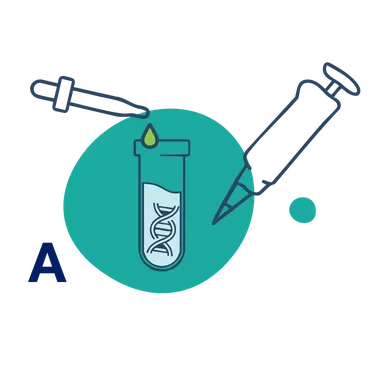
Mix your cargo with BubbleFect in water – done.
Simply combine your nucleic acid or protein cargo with BubbleFect. Mix by pipetting or vortexing.
💡 First-time users can run a quick titration to optimise for their system.
BUBBLES
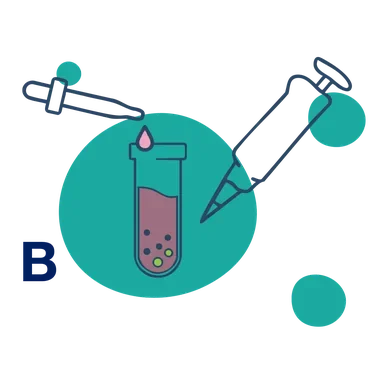
Add serum-free medium to instantly create Bubbles.
Pipette in serum-free medium – Bubbles form on contact. The solution turns cloudy and is ready to use, no incubation needed.
CELLS
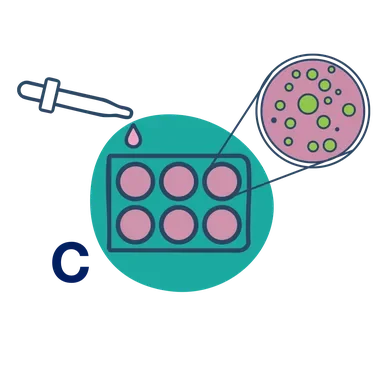
Transfer Bubbles onto your cells – that’s it.
Add an equal volume of Bubbles to cells. Incubate for 1 hour. Optional: wash cells in rich medium and proceed with your standard assay protocol.
BubbleFect for Non-Lipid Transfection — Try it in Your Lab
The case for BubbleFect over leading lipid-based transfection reagents is not that lipid-based reagents do not work. In established cell lines under controlled conditions, they often do. The case is that biology has moved on, and the tools we use to deliver cargo into cells need to move with it.
As research increasingly depends on primary cells, stem cells, suspension cells, and immune cells (and as experimental questions become more sensitive to cell health and viability) the limitations of lipid-based delivery become more consequential. BubbleFect offers a non-lipid, non-viral alternative that meets researchers where they are: delivering comparable or superior efficiency, significantly better cell viability, and a simpler workflow that works from the bench without specialist equipment or cold chain support.
If you are working with difficult-to-transfect cell types, running viability-sensitive experiments, or simply looking for a more reliable and accessible delivery reagent, BubbleFect is ready to be evaluated in your hands.
See the data → partitionbio.co.uk/data
Order BubbleFect or get in touch → partitionbio.co.uk/contact-us